
Martin Rocha / Brand · Creative · Content · Experience
TURN AWE INTO PARTICIPATION.
Virgin Galactic already owns wonder. The next brand chapter is making human spaceflight feel imaginable, personal, and culturally inevitable.
A speculative point of view built around one question: how does a rare technology become a lived identity people can see themselves inside?
Independent speculative vision · Not commissioned by Virgin Galactic
01 / OPPORTUNITY
The commercial problem behind the creative
SPACE HAS AWARENESS. THE GAP IS ACCESS.
The brand job is not simply to make space look extraordinary. It is to help the right person understand: I can actually become one of these people.
That changes the brief from campaign-making to adoption-building: reduce distance, create desire, establish trust, and make the journey legible from first curiosity through lifelong belonging.
Strategic overviewAwareness → adoption
AWEAttention
BELIEFPossibility
ACTIONParticipation
02 / IDENTITY
From product to belonging
THE PRODUCT IS A FLIGHT. THE BRAND IS ASTRONAUT.
The most powerful thing Virgin Galactic can create is not another luxury object. It is one of the rarest identities on Earth — and a community built around the transformation that comes with it.
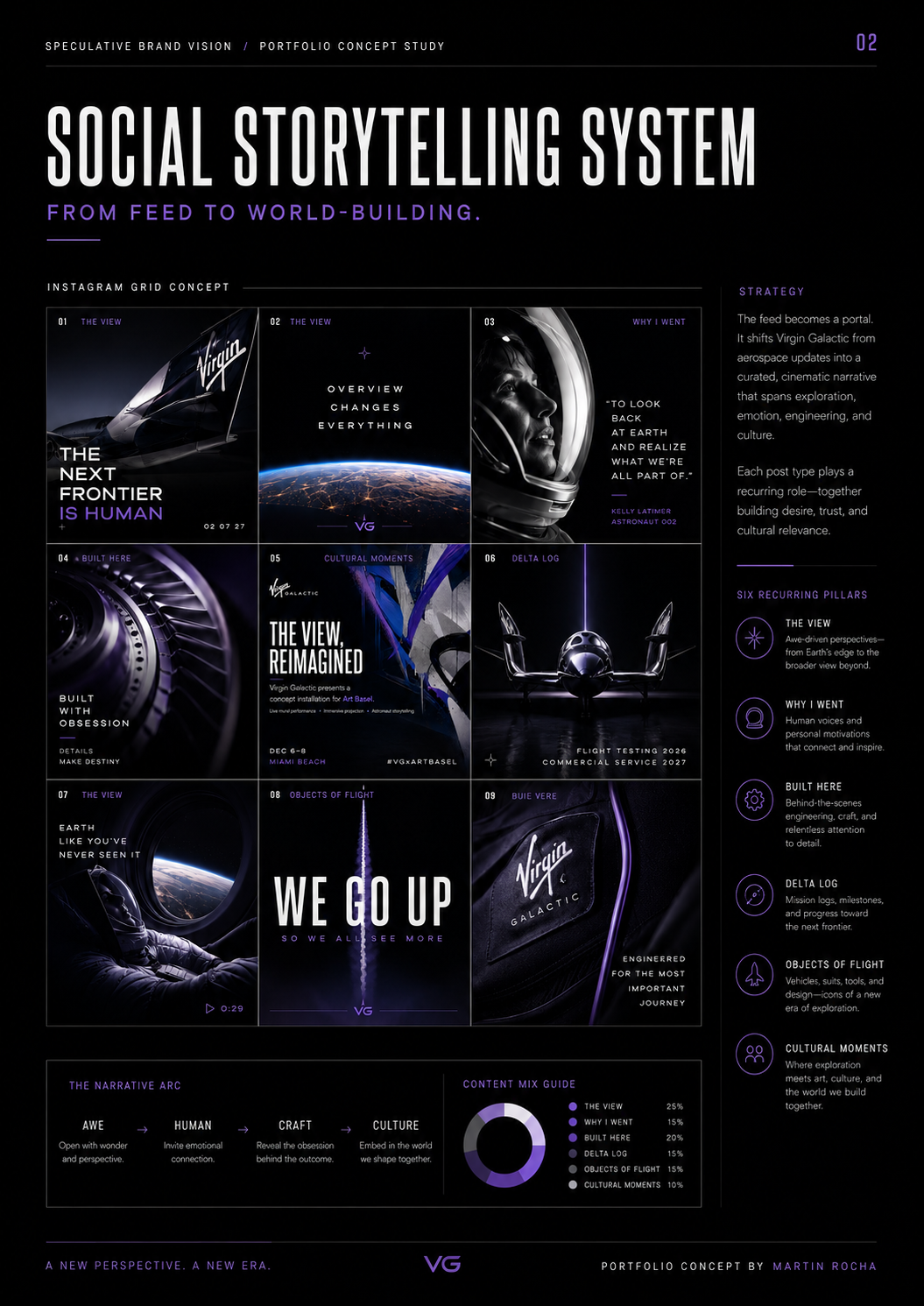
Story systemPeople over product
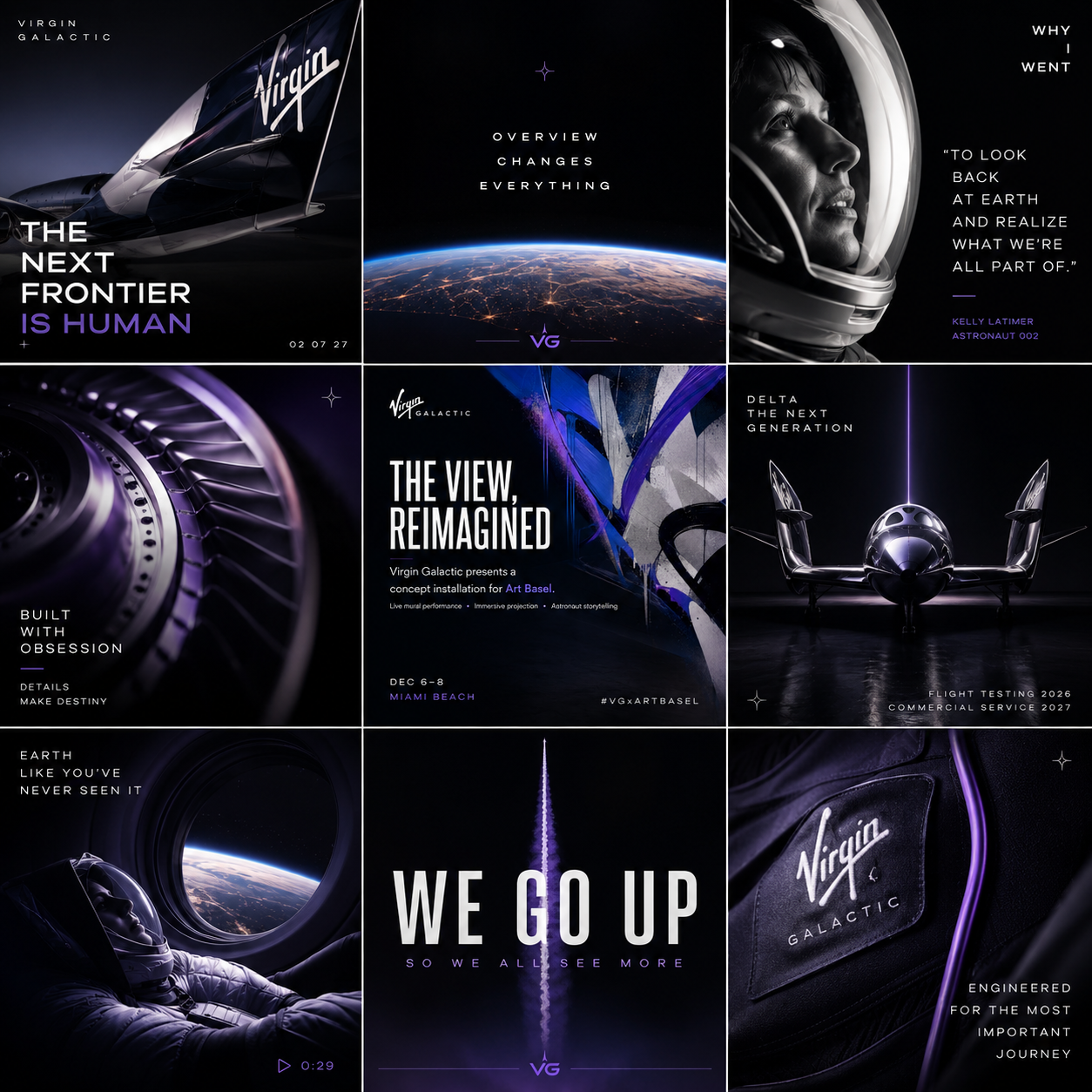
Content languageIdentity in public
People don’t only buy access. They buy into tribes, rituals, signals and stories.
03 / JOURNEY
Design the entire relationship
THE EXPERIENCE STARTS YEARS BEFORE THE FLIGHT.
Treat the customer lifecycle as one continuous brand experience — not a sequence of handoffs between marketing, sales, operations and flight.
DiscoverImagineQualifyReservePrepareFlyBelong
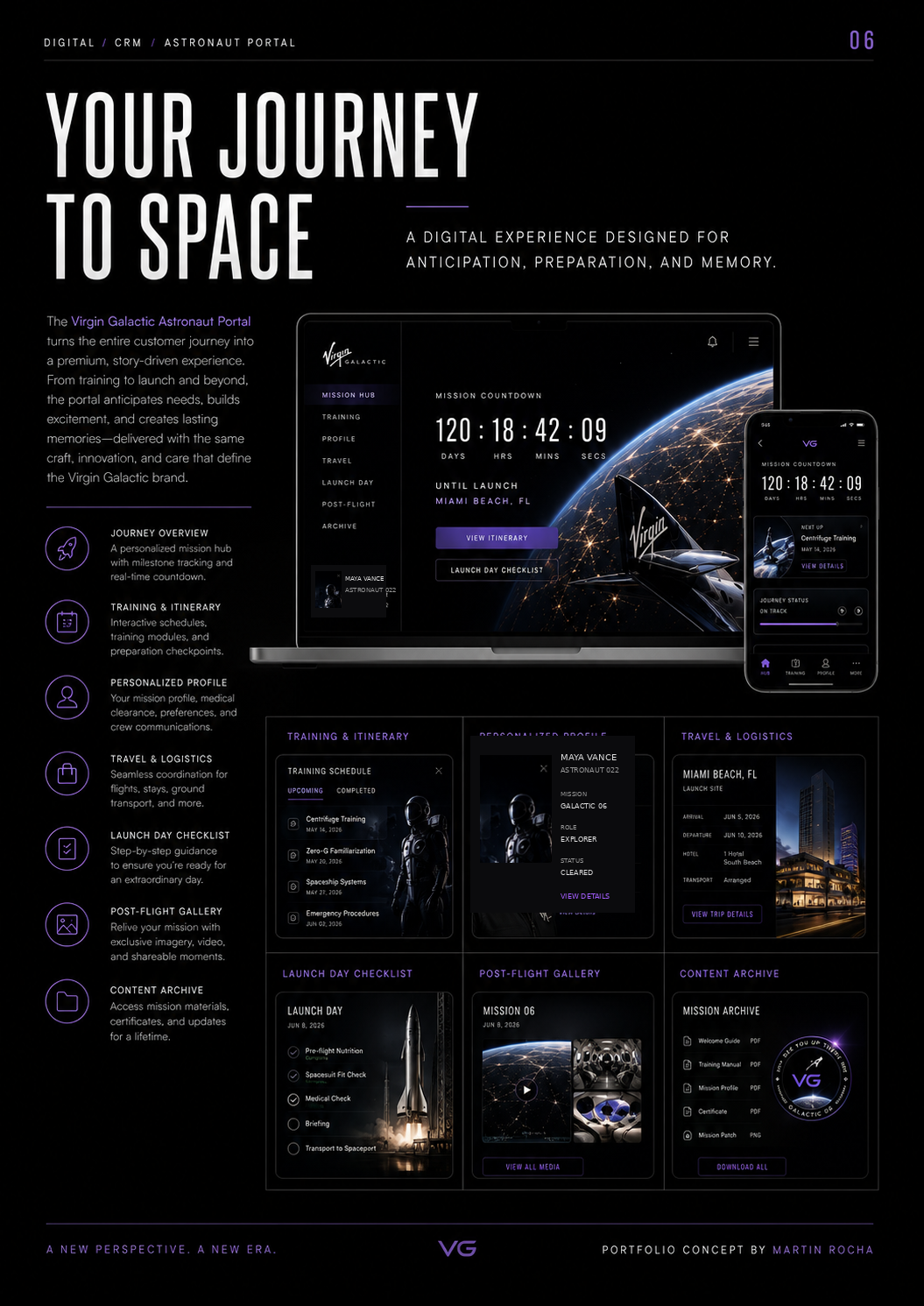
Customer journey systemOne relationship · every touchpoint
05 / CULTURE
Earn relevance outside aerospace
SPACE SHOULD SHOW UP WHERE CULTURE MOVES.
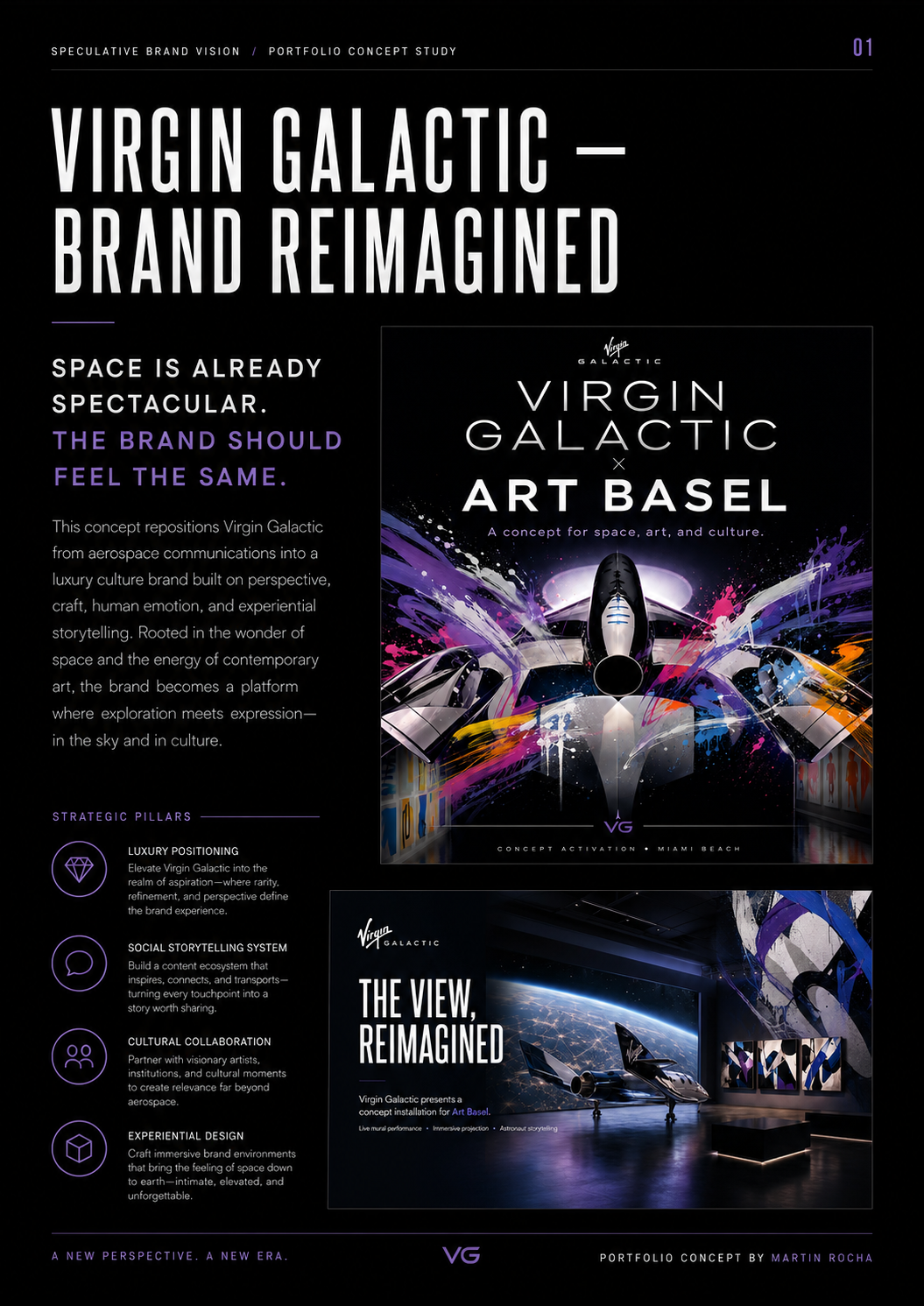
Art Basel works here only if it advances the brand strategy: take the Overview Effect out of the spacecraft and turn it into a cultural experience people can enter before they ever fly.
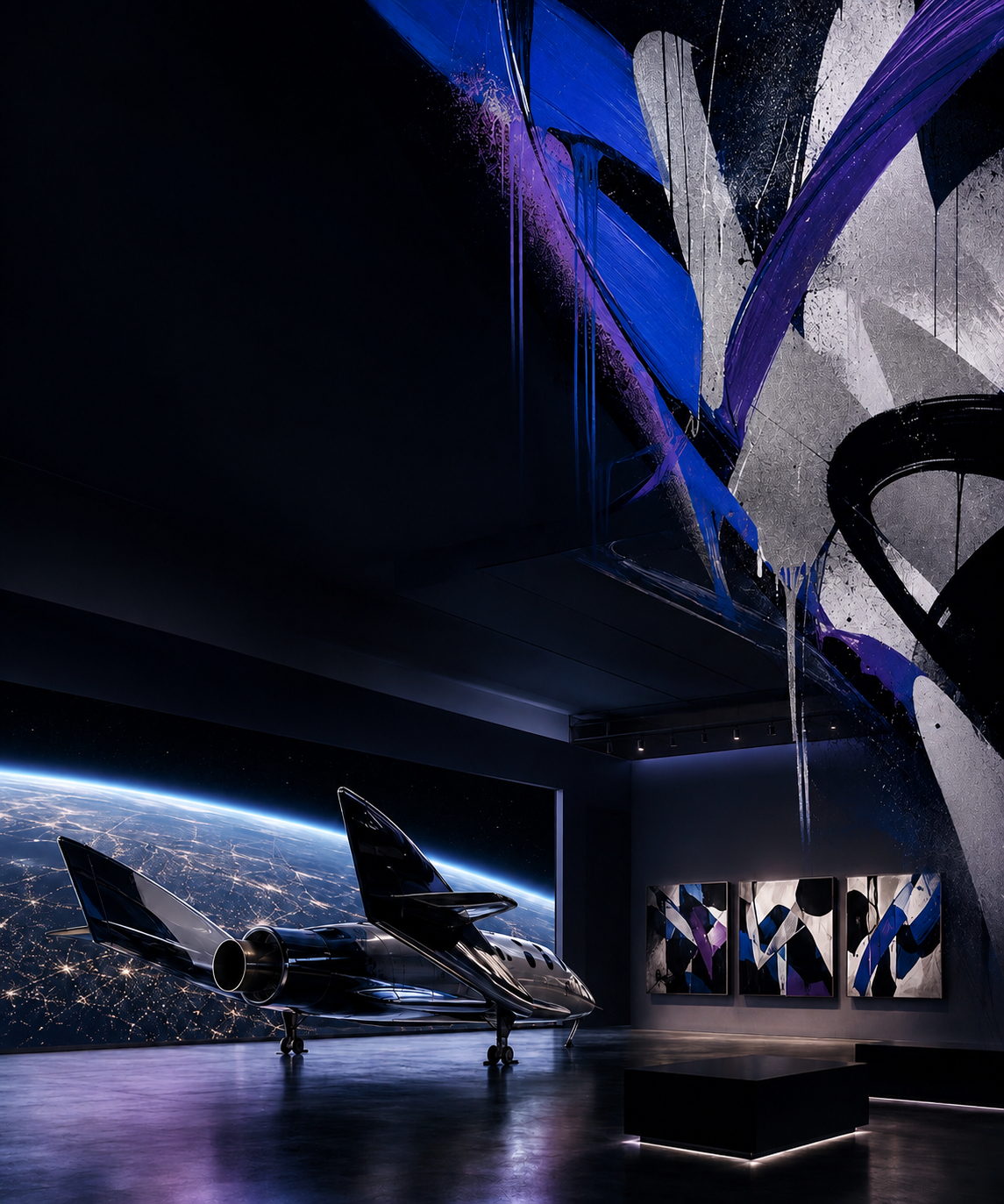
Immersive cultural experienceMiami / speculative
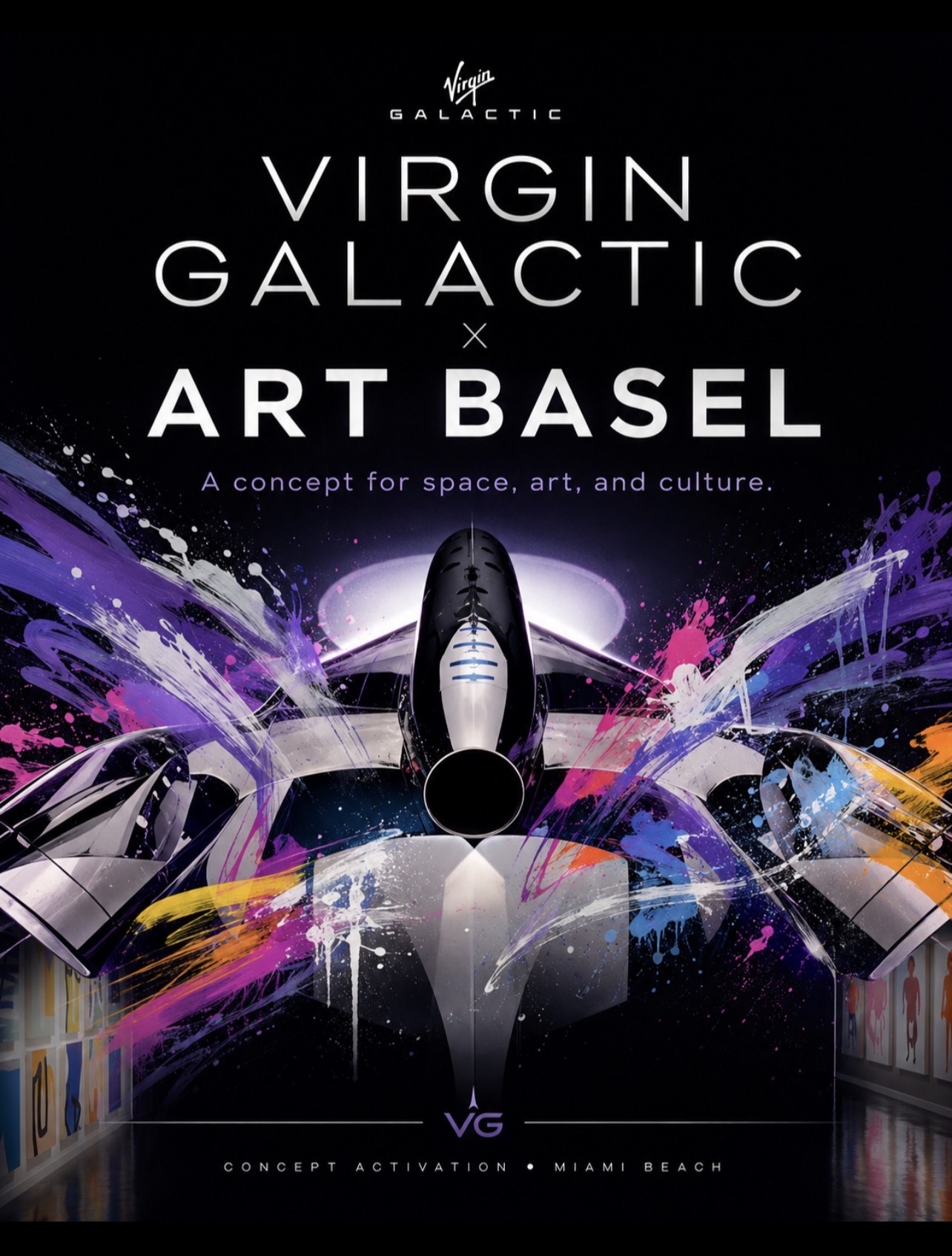
Artist collaborationCraft + spectacle
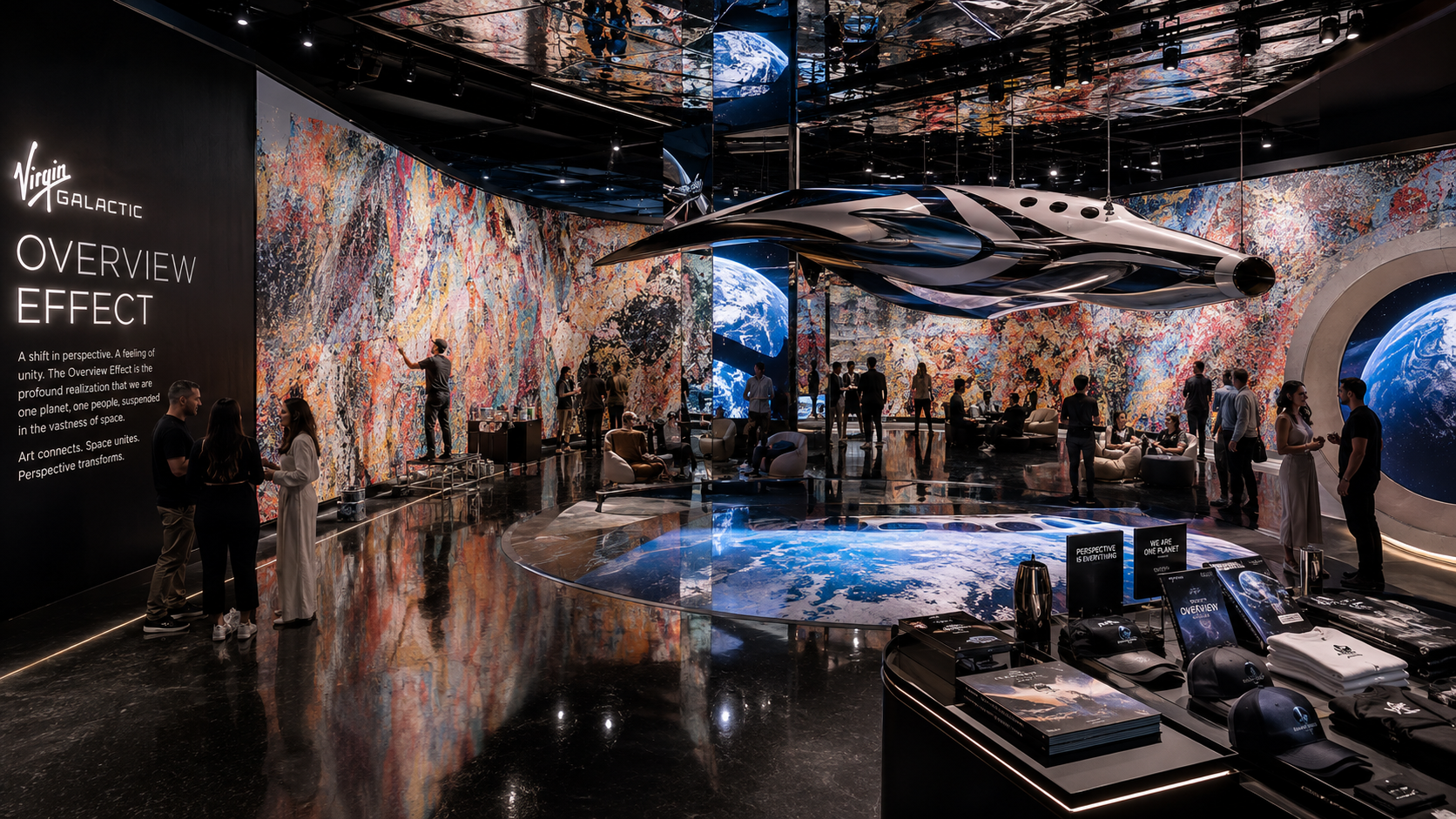
Overview EffectExperience design
ARTNew audience
SPACECore truth
IDENTITYParticipation
PREarned conversation
06 / EXPERIENCE
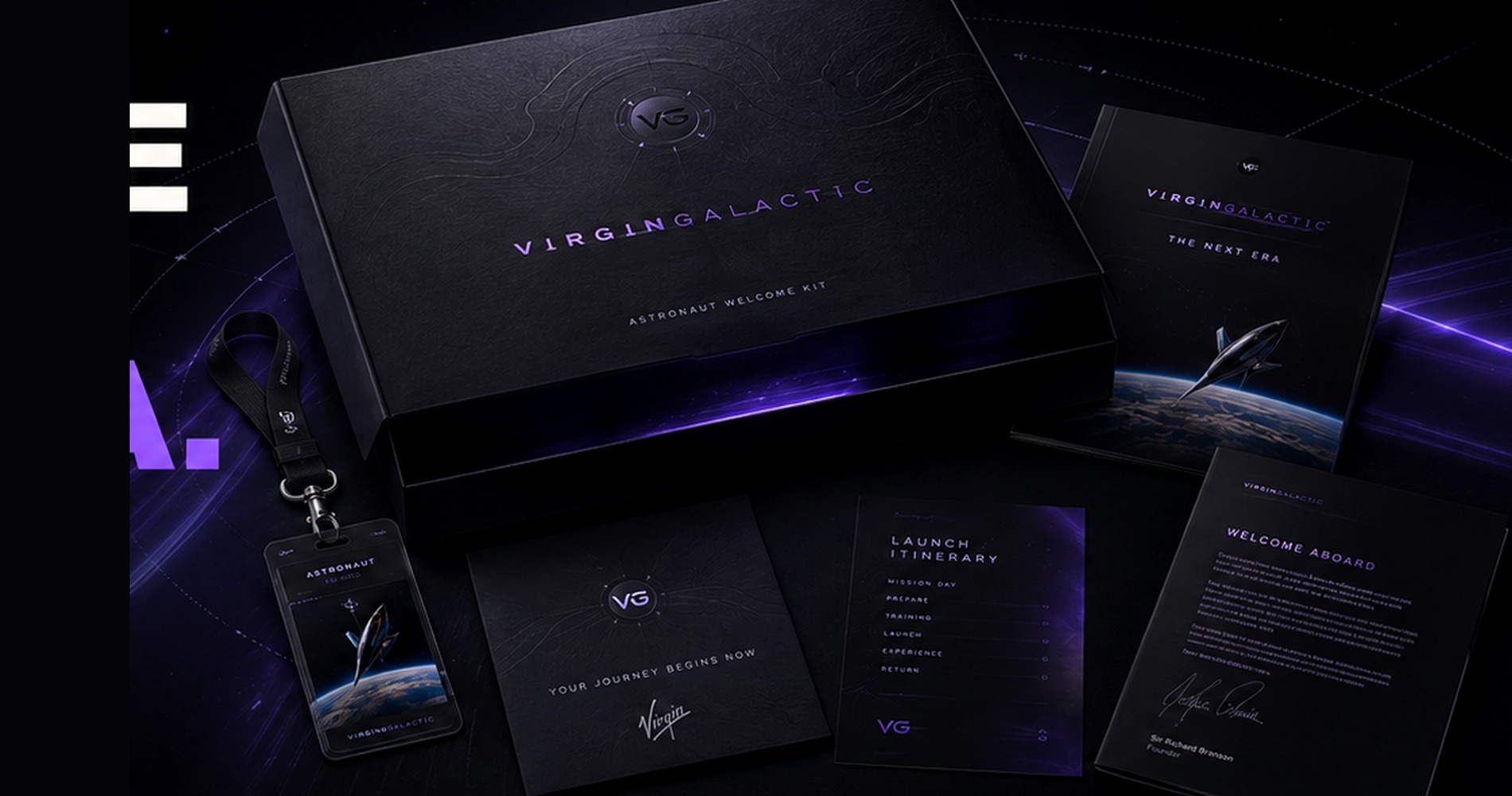
The first physical proof of belonging
ASTRONAUT
WELCOME KIT.
The moment someone commits should feel like crossing a threshold — from interested observer to future astronaut.
A premium welcome ritual can turn a transaction into identity: mission materials, preparation, storytelling and objects designed to make the journey feel real long before flight day.
WELCOME RITUALMISSION MATERIALSMEMBER IDENTITYLIFECYCLE EXPERIENCE
07 / GROWTH
Creative must move the commercial system
BRAND BUILDS DESIRE. SYSTEMS TURN IT INTO MOMENTUM.
The VP role is not an art-director job with a bigger title. It is translating strategy into content, experience and operating systems that move people from curiosity to commitment.
That is where my real-world background matters: scaling creative across retail, product, content, experiential, market launches and multi-team operations while protecting a coherent brand system.
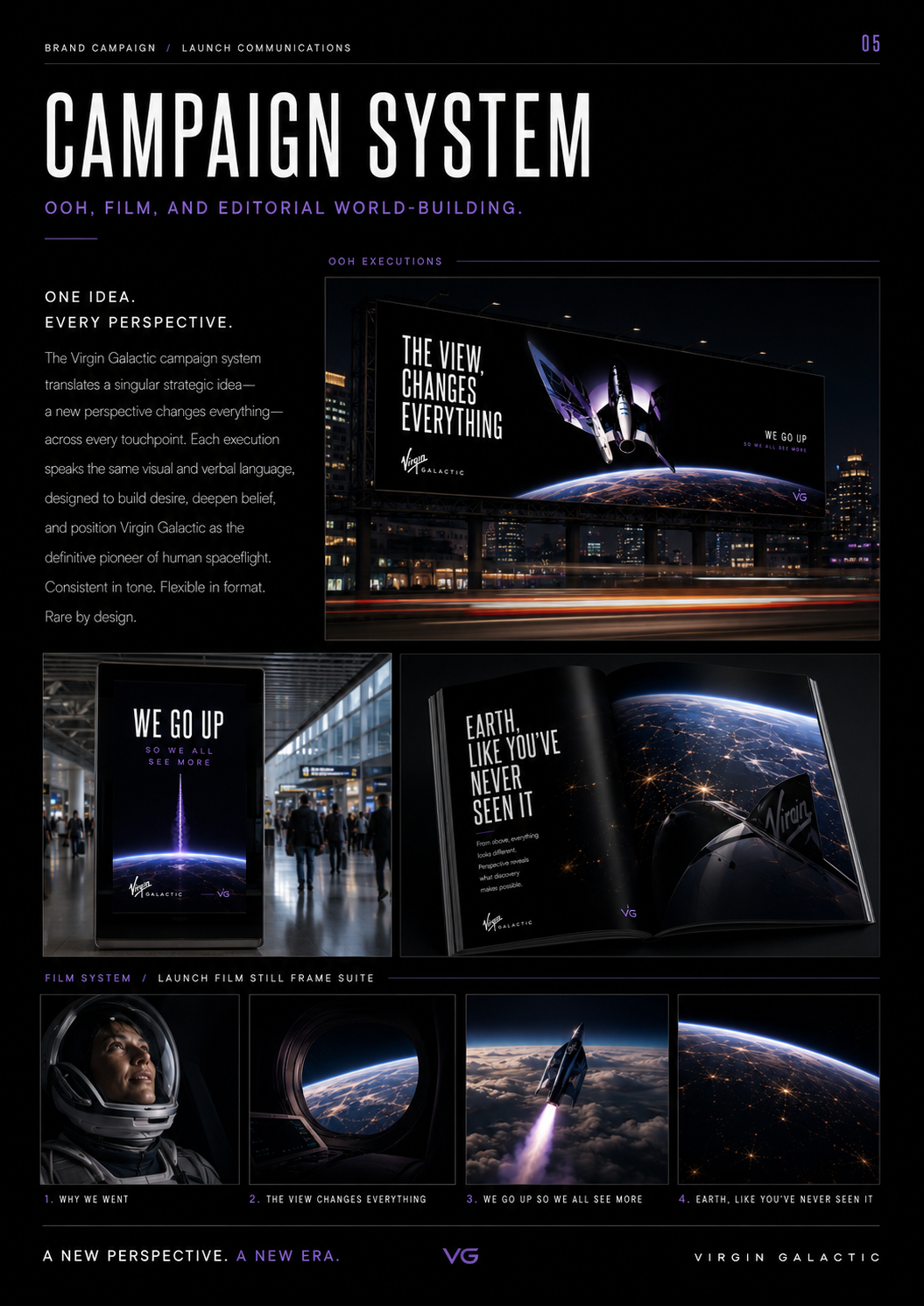
Campaign architectureBrand → growth
Scale / contextScale markers from a company and organization I have helped lead — context for the complexity, reach and operating environment behind the work.
$1.5BForbes-estimated valuationCreative leadership within a brand operating at billion-dollar scale.65Owned retail locationsA physical brand network requiring consistency at scale.1,612Dispensary doorsDistribution reach across licensed retail partners.25+Creative organizationCross-market team spanning brand, design, content and production.8Functions ledCreative and marketing disciplines operating under one system.4State launchesNew-market expansion requiring brand adaptation without dilution. SELECTED SCALE MARKERS FROM STIIIZY / PROFESSIONAL EXPERIENCE
08 / LEADERSHIP
Vision people can execute
SET THE NORTH STAR. BUILD THE SYSTEM. LET GREAT PEOPLE COOK.
VISIONMake the mission legible enough that every discipline knows what great looks like.
PEOPLEBuild trust, give strong teams ownership, and create standards without strangling judgment.
SYSTEMSOperationalize knowledge, briefs, approvals and production so scale does not flatten the work.
FIELDStay close enough to execution to know where the real friction lives — not only where the deck says it lives.
Martin Rocha / Brand · Creative · Content · Experience
THE NEXT CATEGORY DESERVES A BRAND PEOPLE CAN BELONG TO.